
- 1
- 2
- 3
- 首页
- 关于平台
平台简介
本科学实验服务平台是莱艾特科技联合中国农业大学科研团队,携手美国芝加哥大学、加拿大McMaster大学、中科院、中国检科院、北京市营养源研究所等国内外一流大学、科研机构和企业资深专家,搭建的技术服务平台。运用国内外先进技术与设备、洁净动物房和良好的实验室,为生命科学实验提供食品、药品安全评估、营养保健品功能评价、动物疫病诊断等技术服务。
- 动物实验平台
整体实验外包
动物实验操作
小动物活体成像
动物行为学
深度分析数据及论文指导
动物分组
活体成像仪使用
水迷宫
课题开展与管理
体重监测
活体成像
十字迷宫
实验方案设计指导
肿块监测
动物模型
八壁迷宫
文献分析与选题指导
实验给药操作
肠炎模型
Y迷宫
实验动物寄养
动物麻醉操作
肥胖与糖尿病模型
T迷宫
SPF级大、小鼠饲养
动物解剖及组织提取
非酒精性脂肪肝
矿场实验
SPF级大、小鼠高脂饲养
采血及分离血清
基因型鉴定
普通级兔、犬、猴、猫、猪、牛、羊饲养
尸体处理
- 病理技术平台
制片前处理
染色
尼氏染色
免疫技术
骨组织脱钙
HE染色
肥大细胞染色
免疫组化
组织脱水
番红固绿(植物/软骨)染色
苯胺蓝染色
免疫荧光(单染)
石蜡包埋
Masson染色
LFB髓鞘染色
免疫荧光(双染)
OCT包埋
天狼猩红染色
普鲁士蓝染色
免疫组化芯片
石蜡白片
PAS糖原染色
VG/EVG染色
组织冰冻切片
阿利新蓝染色
维多利亚染色
病理阅片及报告
组织冰冻切片
AB-PAS染色
von kossa染色
拍照/扫描
硬组织切片
油红O(切片)染色
茜红素染色
阅片/读片
摊片烤片
瑞氏吉姆萨染色
抗酸染色
病理诊断
切片封片
甲苯胺蓝染色
富尔根染色
病理报告
- 检测技术平台
生化分析检测
血常规检测
氨基酸 | 脂肪酸分析
药残 | 微生物检测
前处理-组织匀浆
白细胞 | 红细胞 | 血红蛋白
游离脂肪酸
盐酸克伦特罗 | 四环素
丙氨酸氨 | 天门冬氨酸基转移酶
单核细胞数 | 单核细胞比率
短链脂肪酸
莱克多巴胺 | 沙丁胺醇 | 己烯雌酚
γ-谷氨酰基转移酶 | 脂肪酶
嗜酸细胞数 | 嗜酸细胞比率
18种不饱和脂肪酸
黄曲霉素 | 伏马毒素 | 氰化物
总胆红素 | 直接胆红素
淋巴细胞数 | 淋巴细胞比率
氨基酸分析
沙门氏菌 | 细菌总数 | 大肠菌群
尿素 | 肌酐 | 总蛋白 | 白蛋白
中性粒细胞数 | 中性粒细胞比率
甘油三酯 | 总胆固醇
红细胞压积 | 淋巴细胞数
细胞流式
其它检测实验
高密度 | 低密度脂蛋白胆固醇
血小板 | 血小板平均体积
细胞培养 | 原代细胞培养
微量元素含量检测
葡萄糖 | 尿酸 | 乳酸脱氢酶
血小板体积分布宽度标准差
流式细胞培养 | 流式细胞检测
饲料概略养分分析
- 分子蛋白平台
实时荧光定量PCR
Western Blot检测服务
质粒扩增与提取
定量PCR标准曲线构建
qPCR相对定量
细胞 | 组织蛋白提取
凝胶阻滞迁移电泳(EMSA)
定量PCR标准品构建
基因组DNA抽提
Western Blot
染色质免疫沉淀(ChIP)
Taqman探针设计与合成
RNA提取+反转录
考马斯亮蓝染色
免疫共沉淀(Co-Ip)
qPCR引物设计合成
RNA提取+反转录
明胶酶谱
- 4
科学实验一站式服务平台

Environmental Enrichment for Laboratory Rodents and Rabbits: Requirements of Rodents, Rabbits, and Research
Vera Baumans
Abstract
Environmental conditions such as housing and husbandry have a major impact on the laboratory animal throughout its life and will thereby influence the outcome of animal experiments. However, housing systems for laboratory animals have often been designed on the basis of economic and ergonomic aspects. One possible way to improve the living conditions of laboratory animals is to provide opportunities for the animals to perform a species-specific behavioral repertoire. Environmental enrichment should be regarded both as an essential component of the overall animal care program and equally important as nutrition and veterinary care. The key component of an enrichment program is the animal staff, whose members must be motivated and educated. It is critically important to evaluate environmental enrichment in terms of the benefit to the animal by assessing the use of and preference for a certain enrichment, the effect on behavior and the performance of species-typical behavior, and the effect on physiological parameters. At the same time, it is necessary to evaluate the impact on scientific outcome, how the enrichment influences the scientific study, and whether and how the statistical power is affected. The result will depend on the parameter measured, the type of enrichment used, and the animal strain. In this article, goals of enrichment are defined and discussed. Animal behaviors and needs are described, along with the translation of those needs into environmental enrichment programs. Specific types of environmental enrichment are outlined with examples from the literature, and an evaluation of environmental enrichment is provided.
Key Words
animal needs, environmental enrichment, housing, rabbits, rodents, variation
1 INTRODUCTION
Environmental conditions such as housing and husbandry have a major impact on the laboratory animal throughout its life and will thereby influence the outcome of animal experiments ( Baumans 2004 ; Van de Weerd et al. 2002 ). However, housing systems for laboratory animals have often been designed on the basis of economic and ergonomic aspects (e.g., equipment, costs, space, workload, ability to observe the animals, and ability to maintain a certain degree of hygiene) with little or no consideration for animal welfare ( Baumans 1997 , 2004 ; Olsson et al 2003 ; Van de Weerd et al. 1997a , b ). The traditional care and maintenance of laboratory animals does not usually include species-specific needs in relation to their environment. The variability in the specific needs, however, is different not only between species but also, due to variability in the genetic background, among strains of a species ( Van de Weerd et al. 1994 ).
1.1 Behavioral Repertoire of Rodents and Rabbits
Laboratory rodents and rabbits have partially adapted to captive life, but still reveal similarities to their wild counterparts ( Baumans 2004 ; Berdoy 2002 ; Stauffacher 1995 ). For that reason, the environment of the laboratory animal should accommodate innate physiological and behavioral needs such as social contacts, resting, nest building, hiding, exploring, foraging, and gnawing. For example, rodents and rabbits are very susceptible to predators and are thus likely to show strong fear responses in unfamiliar situations when they cannot find shelter. Examples of this behavior include attempts to flee, to bite when handled, or to become suddenly immobile to avoid being detected. Ideally, the animal should feel secure in a complex, challenging environment that it can control ( Poole 1998 ).
One possible way to improve the living conditions of laboratory animals is to provide opportunities for the animals to perform a species-specific behavioral repertoire. Opportunities may result from providing environmental enrichment, which can be defined as follows: any modification in the environment of captive animals that seeks to enhance its physical and psychological well-being by providing stimuli meeting the animals' species-specific needs ( Baumans 2000 ; Newberry 1995 ). Environmental enrichment applies to heterogeneous methods of improving animal welfare and includes everything from social companionship to toys ( Young 2003 ). Environmental enrichment can influence the animal's behavior, physiology, and brain anatomy. For example, Hebb (1947) showed that rats from enriched environments were better able to solve problems in the “Hebb-Williams maze.” Animals that have been kept in enriched captive environments have improved learning abilities; increased cortical thickness and weight; increased size, number, and complexity of nerve synapses; and a higher ratio of RNA to DNA ( Renner and Hackett Renner 1993 ; Shepherdson 1998 ; Widman et al. 1992 ). In this context, environmental enrichment is used as an experimental tool in neurobehavioral research.
Environmental enrichment programs were initially developed in zoos in an effort to enhance the environment of captive animals ( Shepherdson 1998 ). The use of environmental enrichment to improve the well-being of laboratory animals is widely promoted and is currently incorporated in European legislation (Council of Europe, Revision of Appendix A, ETS 123, in preparation).
1.2 Goals of Environmental Enrichment
The goals of environmental enrichment are to improve the quality of the captive environment so that the animal has a greater choice of activity and some control over its social and spatial environment ( Newberry 1995 ; Stauffacher 1995 ). Enrichment should pose no risks to the animals (i.e., cause injuries or excessive aggression), to the humans (i.e., jeopardize the health and safety of the animal staff), or to the experiments (i.e., cause undesirable interference or an excessive increase in the number of animals used). The design of enrichment items should be based on knowledge of behavioral needs and data available from enrichment studies and should be scientifically tested prior to marketing and implementation ( Van Loo et al. 2004 ).
The implementation of specific environmental enrichment approaches should be based on the following important tenets:
Improving the quality of the captive environment so that the animal has a greater choice of activity and some control over its social and spatial environment ( Newberry 1995 ; Stauffacher 1995 );
Increasing behavioral diversity;
Reducing the frequency of abnormal behavior;
Increasing positive utilization of the environment;
Increasing the animal's ability to cope with challenges ( Young 2003 ).
Environmental enrichment has been introduced increasingly into laboratory animal research facilities ( Olsson and Dahlborn 2002 ). From a welfare perspective, this increase appears to be a positive development because it is generally accepted that the animal's well-being improves with the provision of environmental enrichment.
When animals are deprived of the possibility to perform species-specific behavior, they may show signs of suffering such as behavioral disorders, chronic stress, or other pathological conditions ( Würbel et al. 1996 ). It has been shown that barren, restrictive, and socially deprived housing conditions interfere with the development and function of brain and behavioral functions. Beneficial effects of environmental enrichment have been described in animals with brain damage and disturbed motor function, and an increased arborization of dendrites in the brain has been identified ( Mohammed et al. 2002 ). In addition, investigators have observed genetic differences between mouse strains that have been obscured by standard laboratory rearing compared with enriched environments ( Henderson 1970 ; Würbel 2001 ).
1.3 Animal Needs
Animals have physiological and behavioral needs. Physiological needs include eating, drinking, and sleeping, and should logically include some provision of shelter. Behavioral needs include performing behavior necessary for the maintenance of a normal physiological and psychological state ( Poole 1998 ), such as social behavior, exploration, foraging, grooming, digging, nest building, and seeking shelter. These behaviors, which are performed by rodents and rabbits in the wild as well as in captivity, may be considered essential innate behaviors.
To assess the needs of animals and identify what they want in their environment, it is necessary to know and understand the animal's natural behavior. Studying the behavior of ancestors of current laboratory rodents that still live in the wild provides a good starting point ( Baumans 2004 ; Berdoy 2002 ; Sörensen 2004 ); however, not all naturally occurring behaviors or all aspects of life in a natural environment are desirable or necessary in the laboratory. Nevertheless, it is generally agreed that environmental enrichment is beneficial for the well-being of laboratory animals and that it should be applied whenever appropriate or practical ( Kaliste and Mering 2004 ). It is not so much a matter of bringing natural behaviors into the laboratory as it is of bringing crucial features of the environment into the laboratory so that natural behaviors may be expressed and reinforced ( Blanchard and Blanchard 2003 ).
1.4 Translation of Animal Needs into Environmental Enrichment Programs
To assess the preference of an animal for a certain feature, one can use well-designed choice tests ( Blom et al. 1995 ; Van de Weerd et al. 1997a ; Van Loo et al. 2001 ) preferably combined with consumer-demand tests, which show how much an animal is willing to “pay” for that feature. This method provides a way of prioritizing animal needs ( Dawkins 1983 ; Mason et al. 2001 ; Sherwin and Nicol 1997 ). Enrichment programs should focus on behavior that is strongly motivated, such as social behavior, foraging, nest building and exploring.
The key component of an enrichment program is the animal staff, whose members must be motivated, educated, and empowered to implement the enrichment program ( Baumans 1997 ; Young 2003 ). Including the input of participating animal caregivers and researchers is recommended in establishing an enrichment group within an institution, along with management representatives, veterinarians, and invited outside experts ( Stewart and Bayne 2004 ; Young 2003 ). Enrichment should be regarded both as an essential component of the overall animal care program and equally important as nutrition and veterinary care. All decisions related to enrichment should be included in the standard operating procedures of the institution ( Stewart 2004 ) to standardize the approaches and to facilitate acceptance by researchers, animal staff, and management. Moreover, records and/or databases should be established with data to support the introduction and evaluation of different types of enrichment.
2 TYPES OF ENVIRONMENTAL ENRICHMENT
Environmental enrichment should comprise a well-designed and critically evaluated program that benefits the animals as well as the experimental outcome. It should not be a process of randomly applying objects that staff consider attractive for the animals. The types of enrichment, typically categorized as social and physical enrichment, are described below ( Van de Weerd and Baumans 1995 ; Young 2003 ).
2.1 Social Enrichment
Social enrichment includes socialization of animals both in contact and not in contact (termed “noncontact") with conspecifics and/or contraspecifics, including humans. The respective descriptions appear below.
2.1.1 Social Contact Enrichment
Gregarious species should be housed in groups or in pairs with conspecifics. Ideally, animals housed together should be littermates, but this arrangement might not be possible in the majority of cases due to group size and possible bias in the study. However, the group composition should be stable and harmonious ( Love 1994 ; Morton et al. 1993 ; Stauffacher, 1997a ; Turner et al. 1997 ), although it may be necessary to provide visual barriers or hiding places to minimize aggression ( Stauffacher 1997b , 2000 ; Van de Weerd and Baumans 1995 ; Van Loo et al. 2002 ). Even in harmonious groups, it is necessary to allow individuals to initiate contact by approach or to avoid contact by withdrawal from sight.
For social animals, a social partner is the most challenging enrichment factor. Whereas enrichment objects are static and of interest only for specific activities, a social partner always creates new and unpredictable situations to which the animal must react. A social partner leads to an increase of alertness and exploratory behavior and provides diversion, occupation, and probably also some feelings of “security” in stable harmonious groups ( Stauffacher 2000 ).
Procedure-induced stress-like responses are less frequent and of shorter duration in group-housed rats than in those housed singly ( Sharp et al. 2002 , 2003 ). In 1997, the Multilateral Consultation of the Council of Europe adopted a resolution related to the accommodation and care of laboratory animals, which specified that “group housing, even pair housing, is preferable to individual housing for all gregarious species normally manifesting social behavior, as long as the groups are stable and harmonious” ( Council of Europe 1997 ) For other important guidelines, according to the Guide for the Care and Use of Laboratory Animals ( NRC 1996 ), “Animals should be housed with a goal of maximizing species-specific behaviors and minimizing stress-induced behaviors. For social species, this normally requires housing in compatible pairs or groups” (p. 22). Finally, contact with humans (e.g., handling, training, and socializing) usually benefits both the animals and the outcome of experiments because it engages the animal on a cognitive level and allows positive interaction with animal caretakers, technicians, and scientists ( Baumans 2004 ; Shepherdson 1998 ; Van de Weerd and Baumans 1995 ).
2.1.2 Social Noncontact Enrichment
Social noncontact enrichment includes visual, auditory, and olfactory communication with conspecifics or contraspecifics (e.g., through bars or mesh). In the resolution of the Council of Europe on the accommodation and care of laboratory animals, it is stated that when group housing is not possible, “consideration should be given to accommodating conspecifics within sight, sound or smell of one another” ( Council of Europe 1997 ; NRC 1996 ). However, it should be noted that this approach might be aversive to animals when they are exposed to these stimuli without the possibility of escaping.
2.2 Physical Enrichment
Physical enrichment includes complex enclosures and both sensory and nutritional stimuli. These sources of enrichment are described briefly below.
2.2.1 Complexity
Appropriate structuring of the cage/pen environment is typically more beneficial than provision of a larger floor area; however, a minimum floor area is necessary to provide a structured space. Except for locomotor activity (e.g., playing), animals do not actually use space but instead, use resources and structures within an area for specific behaviors. Most rodents and rabbits attempt to divide their living space into separate areas for feeding, resting, and excretion. The divisions also allow the animals to control their environment, including light levels ( Baumans 1997 , 1999 ; Blom 1993 ; Manser et al. 1998 ; Sherwin 1997 ; Stauffacher 1997a ; Townsend 1997 ). Such divisions may be facilitated by structures within the cage (e.g., shelters, nest boxes, nesting material, tubes, and platforms that provide withdrawal areas and lookout possibilities).
The provision of nesting material has been shown to enhance breeding results in mice and rats (also see below). Several reports ( Nolen and Alexander 1966 ; Norris and Adams 1976 ; Porter and Lane-Petter 1965 ) have indicated that providing nesting material can lead to a reduction in pre-weaning mortality and a greater number of surviving pups. However, at least one study ( Eskola and Kaliste-Korhonen 1999b ) has reported that nesting material did not affect breeding results.
2.2.2 Nesting Material
Rats, mice, hamsters, and gerbils. Nesting material is important for rats, mice, hamsters, and gerbils because it enables the animals to create appropriate microenvironments for resting and breeding ( Figure 1 ). It is also important to provide nest boxes or other refuges for rats.
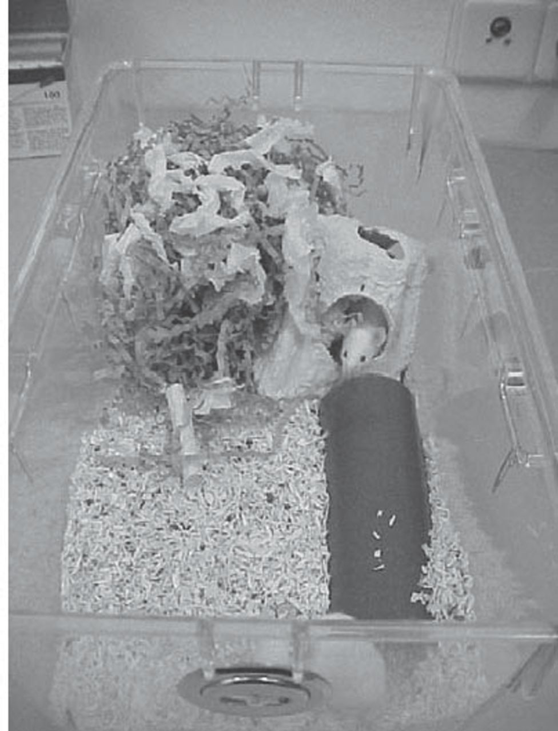
Figure 1 Example of environmental enrichment for mice. Photograph by M. K. Meijer.
Guinea pigs Guinea pigs are cursorial rodents that do not burrow; in the wild, they may live in burrows made by other animals. Refuges such as nest boxes, tubes, or shelters should be provided within the cage or pen to allow the animals to climb onto or hide under them. Hay will satisfy the need for roughage, and wood sticks can be used for chewing and gnawing.
Gerbils In the wild, gerbils build extensive tunnel systems, and in the laboratory they often develop stereotypic digging behavior unless they are provided with adequate facilities ( Waiblinger and Köning 2004 ; Wiedenmayer 1997 ). For this reason, gerbils need comparatively more space for building or using burrows of sufficient size, and they require a thick layer (20 cm long) of litter for digging and nesting and/or a burrow substitute. Nesting material (e.g., hay or straw) and wood sticks can be used for chewing and gnawing.
Hamsters The wild ancestors of the hamster were largely solitary. Housing the animals in groups is possible, but special care should be taken in forming socially harmonious groups, and aggressive animals (especially females) should be separated. At a minimum, enrichment should include nesting material, a refuge area (e.g., a tube or hut), roughage, and gnawing objects.
Rabbits Suitable enrichment for rabbits includes at a minimum roughage, hay blocks, or chew sticks, as well as an area for withdrawal and lookout (e.g., a platform). For breeding does, nesting material and a nest box or other refuge should be provided. In floor pens for group housing, the provision of visual barriers ( Figure 2 ) is recommended (Council of Europe, Revision of Appendix A of the Convention ETS 123).
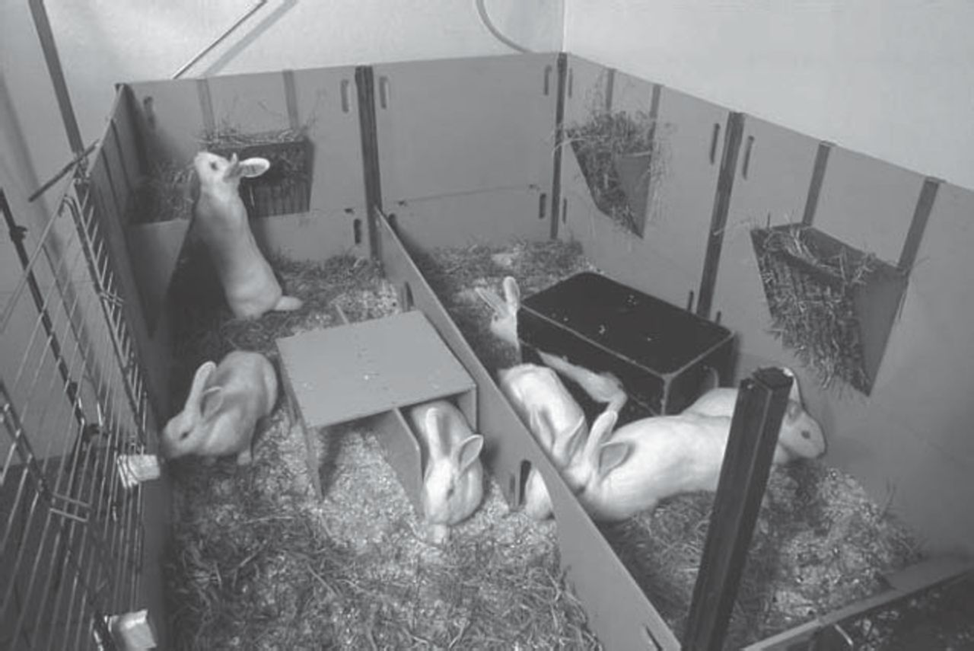
Figure 2 Example of enriched housing for rabbits. Photograph by Novo Nordisk A/S, Denmark.
Breeding animals are not the only animals to use nesting material. It has been shown that laboratory mice will readily use nesting material and perform nest-building behavior ( Eskola and Kaliste-Korhonen 1999a ; Van de Weerd et al. 1997a , 1998 ), and that they spent 10 to 20% of their time-budget manipulating nesting material ( Van de Weerd et al. 1997b ). Toys can have a beneficial effect on the animals in developing exploratory behavior and locomotor and visual performance. One reason animals play is to practice the behavioral skills they need for survival ( Young 2003 ). However, toys have a limited time of attraction—typically 1 day ( Young 2003 ). A certain level of exploration can be maintained by changing toys frequently, but toys that are related to food or nesting retain their attraction longer.
2.3 Sensory Enrichment
Sensory enrichment includes visual, auditory, olfactory, tactile, and taste stimuli. Possibly the most satisfying enrichment for rodents and rabbits is visual, auditory, olfactory, and tactile communication with conspecifics or contraspecifics, either directly or through bars. Mirrors provided in mouse cages have not appeared to fulfill the criteria for an enrichment item, as in studies with primates ( Sherwin 2004 ), possibly because albino mice have poor vision.
It has been suggested that a constant background noise during daytime (e.g., 85-dB volume radio music) has some benefits in facilitating breeding and decreases the excitability of animals by reducing the startle effect of sudden noises ( NRC 1996 ). Behavioral results suggest that new age music has an overall calming effect on mice, compared with classical, pop, or no music. However, mice still showed a disturbance reaction (freeze or flight) during exposure to loud noise, irrespective of background music ( Van Loo et al. 2004 ). Nevertheless, the use of radios in animal facilities during daytime may benefit the animal staff, which could in turn have beneficial consequences for the animals ( Sherwin 2002 ; Van Loo et al. 2004 ).
Cage cleaning is a necessary routine procedure in laboratory animal facilities; however, removal of the olfactory cues disturbs the social hierarchy of the animals in the cage, often resulting in a peak in aggression among male mice. It has been shown that olfactory cues from nesting and bedding material have affected aggression in a different way: Transfer of nesting material reduced aggression, whereas sawdust containing urine/feces intensified aggression ( Van Loo et al. 2000 ). Providing the animals with different food items (e.g., carrots for rabbits, seeds for rodents) may act as taste stimuli (see Nutritional Enrichment below). However, this approach might interfere with good laboratory practice (GLP 1 ) requirements. It is possible to achieve tactile stimulation by providing nesting material, shelter, and the opportunity to dig.
2.4 Nutritional Enrichment
Animals tend to be highly motivated to make use of enrichment involving food items. Reports of many studies have provided such data. It is also important to note that GLP requirements might demand a definition and analysis of the materials used.
Frequency and schedule have an impact on the animal. Krohn and colleagues (1999) reported that feeding rabbits immediately before dark, in their active period instead of in the morning, reduced stereotypic behavior remarkably. Presentation of food and giving the animal the opportunity to forage (e.g., scattering food in the bedding) appear to prevent boredom because in nature, a large part of the time-budget is spent on this activity, even though these food items might be contaminated by feces and urine when the animals have no opportunity to compartmentalize their environment. Mench (1998) has reported that animals preferentially search for food even when it is readily available because this behavior affords them information about the location and quality of potential foraging sites. Additional food items such as hay, straw, or grass cubes can satisfy the need for roughage and for chewing in guinea pigs and rabbits ( Baumans 1997 ). Rodents and rabbits use soft wood sticks for gnawing. Rats gnaw on aspen blocks, especially when they are housed without bedding ( Eskola et al. 1999a ; Kaliste-Korhonen et al. 1995 ). Hamsters ( Niethammer 1988 ) and gerbils ( Brain 1999 ) routinely store food and should be provided with food pellets inside the cage.
3 EVALUATION OF ENRICHMENT
Factors such as genotype, age, sex, and individual variation influence exploration and animals' responses to novelty ( Mench 1998 ), as do housing conditions in general ( Jahkel et al. 2000 ; Olsson et al. 2003 ; Prior and Sachser 1995 ; Rilke et al. 1998 ; Van de Weerd et al. 1994 ). Whenever environmental enrichment is added to an animal enclosure, new material that is involved (e.g., paper or wood) might also influence the animal and the experiment. For example, volatile compounds of bedding material and enrichment items have been shown to affect the animals ( Vesell 1967 ). Standardization of environmental conditions serves to reduce individual differences within animal groups (intraexperiment variation) ultimately facilitating the detection of treatment effects, and to reduce differences between studies (interexperiment variation) ultimately increasing the reproducibility of results across laboratories ( Olsson et al. 2003 ; Van Zutphen et al. 1993 ). Nevertheless, Crabbe and coworkers (1999) and Wahlsten and colleagues (2003) have shown that despite rigorous efforts to equalize conditions among sites, different inbred mouse strains tested, which originated simultaneously from three well-recommended laboratories, revealed significant effects from their respective sites for nearly all variables examined.
For the reasons described above, it is critically important to evaluate environmental enrichment in terms of the benefit to the animal by assessing the following factors: the use of and preference for a certain enrichment; the effect on behavior (e.g., absence of abnormal behavior); the performance of species-typical behavior; and the effect on physiological parameters (e.g., body weight, heart rate, stress-related hormones, and immunology). At the same time, it is necessary to evaluate the impact on scientific outcome—whether the enrichment influences the scientific study (e.g., nutritional studies in the case of nutritional enrichment). Moreover, it is imperative to assess whether and how the statistical power is affected. The power of an experiment and the sample size might be increased, reduced, or unchanged due to the provided enrichment.
Based on the definition of animal well-being as the ability of the animal to cope successfully with its environment ( Broom 1986 ), it follows that animals from an enriched environment may be better able to cope with environmental variations such as differences in housing conditions between breeder and animal facility and during experimental procedures. This result is consistent with the refinement principle of Russell and Burch (1959) . In addition, because enriched animals have been shown to be less reactive to stressful experimental situations, there should be less variation between results, which should ultimately reduce the number of animals used ( Baumans 1997 ; Stauffacher 1997b ; Van de Weerd et al. 2002 ) and fulfill the reduction principle of Russell and Burch. Furthermore, as animals from enriched housing conditions are expected to be physiologically and psychologically more stable, they may be considered as more refined animal models, ensuring better scientific results ( Bayne 1996 ; Benn 1995 ; Dean 1999 ; Rose 1994 ; Spinelli and Markowitz 1985 ; Van de Weerd 1996 ; Van de Weerd et al. 2002 ). When housing conditions do not meet the demands of a particular species, one cannot expect reliable and reproducible results ( Fortmeyer 1982 ). Mice from enriched environments have been shown to have an increased behavioral repertoire and less stress ( Newberry 1995 ; Van de Weerd et al. 2002 ), and to be less fearful and easier to handle ( Van de Weerd et al. 1997b , 2002 ).
Despite the reports described above, concern persists that enrichment conflicts with the standardization of animal experiments because the potential exists for animals from an enriched environment to show more variability in their response to experimental procedures. The concern is that this characteristic may lead to more variation in results and to an increase in the number of animals used ( Eskola et al. 1999b ; Mering et al. 2001 ; Tsai et al. 2003 ). Although the objective is to minimize all sources of variation to achieve highly accurate and reliable results in animal-based research, the possible variation introduced by environmental enrichment might not be a negative factor because it might mean that the animals are allowed to express more of their behavior and that the experiment performed on a nonstressed and healthy animal has indeed led to more reliable results ( Young 2003 ).
Moreover, other findings suggest that enrichment does not necessarily increase variation in results. It has been shown that nesting material did not influence the behavior and physiology of mice to a great extent ( Augustsson et al. 2003 ; Van de Weerd et al.1997a , b ). Mice provided with objects and nesting material habituated faster to open field tests and did not show effects on the circadian rhythm of behavioral patterns ( Wainwright et al. 1994 ). In some pharmacological experiments, mice and hamsters housed in enriched cages showed a more sensitive response to anxiolytic drugs ( Baumans 1997 ) and fever ( Kuhnen 1997 , 1999 ). Group-housed rabbits did not show any immunosuppression ( Turner et al. 1997 ). However, several different reports on the effect of enrichment on experimental results have emphasized that in addition to the beneficial effects of enrichment on animals, it is important to evaluate specific parameters, the type of enrichment, and the animal strain.
Thus, enrichment has been reported to increase, decrease, or not affect variability, depending on the parameter studied ( Eskola et al. 1999b ; Tsai et al. 2003 ; Van de Weerd et al. 2002 ). Investigators have described strain differences in mice with respect to their response to enrichment ( Nevison et al. 1999 ; Van de Weerd et al. 1994 ). With regard to the type of enrichment, it is advisable to focus on specific needs of the animals and to implement relatively simple enrichment because that approach will influence variability much less than a complex cage as used in the field of neuroscience in order to induce changes in the brain and in learning and memory abilities. Finally, it is very important to describe the type of enrichment sufficiently in the Material and Methods section of scientific publications to ensure the reproducibility of experimental results. Only then can we accurately define and measure the controls and variables in the scientific experiment.
4 CONCLUSION
It is incumbent upon individuals who use and care for laboratory animals to seek to improve the quality of the captive environment. To that end, well-designed and carefully communicated enrichment approaches are required. Even when enrichment increases variation within the experimental study, it is important not to overstate the variation but instead, to balance the variation against the improved well-being of the animals. More data are needed to provide information related to the effects of specific enrichment programs on the animal, on specific animal species, strains and models, and on experimental results. These results must be based on approaches designed and implemented by successful enrichment programs.
Future scientific work is likely to involve many genetically modified strains of rodents. Because it is clear that a single approach to enrichment is not suitable for all species, we can anticipate the likelihood that a single approach to enrichment will not be suitable for all strains of rodents. For this reason among others, scientists are urged to compile, document, and publish pertinent data to dispel the myths and define the variations related to environmental enrichment.
5 REFERENCES
Augustsson H Van de Weerd HA Kruitwagen CLJJ Baumans V . 2003 . Effect of enrichment on variation and results in the light/dark test . Lab Anim 37 : 328 – 340 .
Baumans V . 1997 . Environmental enrichment: Practical applications . In: Van Zutphen LFM Balls M eds. Animal Alternatives, Welfare and Ethics . Amsterdam : Elsevier BV . p 187 – 191 .
Baumans V . 1999 . The laboratory mouse . In: Poole T ed. UFAW Handbook on the Care and Management of Laboratory Animals . Vol. 1 . Oxford : Blackwell Science Ltd . p 282 – 312 .
Baumans V . 2000 . Environmental Enrichment: A right of rodents! In: Balls M Van Zeller A-M Halder M eds. Progress in the Reduction, Refinement and Replacement of Animal Experimentation . Amsterdam : Elsevier BV . p 1251 – 1255 .
Baumans V . 2004 . The welfare of laboratory mice . In: Kaliste E ed. The Welfare of Laboratory Animals . Dordrecht : Kluwer Academic Publishers . p 119 – 152 .
Bayne K . 1996 . Normal and abnormal behaviors of laboratory animals: What do they mean? Lab Anim 25 : 21 – 24 .
Benn DM . 1995 . Innovations in research animal care . J Am Vet Med Assoc 206 : 465 – 468 .
Berdoy M . 2002 . Ratlife . Available online ( www.ratlife.org ) .
Blanchard RJ Blanchard DC . 2003 . Bringing natural behaviors into the laboratory: A tribute to Paul MacLean . Physiol Behav 79 : 515 – 524 .
Blom HJM . 1993 . Evaluation of housing conditions for laboratory mice and rats . Thesis , Utrecht University , the Netherlands .
Blom HJM Van Tintelen G Baumans V Van den Broek J Beynen AC . 1995 . Development and application of a preference test system to evaluate housing conditions for laboratory rats . Appl Anim Behav Sci 43 : 279 – 290 .
Brain PF . 1999 . The laboratory gerbil . In: Poole T ed. UFAW Handbook on the Care and Management of Laboratory Animals . Vol. 1 . Oxford : Blackwell Science Ltd . p 345 – 355 .
Broom DM . 1986 . Indicators of poor welfare . Br Vet J 142 : 524 – 526 .
Council of Europe . 1997 . Resolution on the Accommodation and Care of Laboratory Animals , adopted by the multilateral consultation on 30 May 1997 . Strasbourg , France .
Council of Europe , Revision of Appendix A in preparation , European Convention for the Protection of Vertebrate Animals Used for Experimental and Other Scientific Purposes [ETS 123] , Strasbourg , France . Available online ( www.coe.int/animalwelfare ) .
Crabbe JC Wahlsten D Dudek BC . 1999 . Genetics of mouse behavior: Interactions with laboratory environment . Science 284 : 1670 – 1672 .
Dawkins MS . 1983 . Battery hens name their price: Consumer demand theory and the measurements of ethological “needs." Anim Behav 31 : 1195 – 2005 .
Dean SW . 1999 . Environmental enrichment of laboratory animals used in regulatory toxicology studies . Lab Anim 33 : 309 – 327 .
Eskola S Kaliste-Korhonen E . 1999 . Aspen wood-wool is preferred as a resting place, but does not affect intracage fighting of male BALB/c and C57BL/6J mice . Lab Anim 33 : 108 – 121 .
Eskola S Kaliste-Korhonen E . 1999 . Nesting material and number of females per cage: Effects on mice productivity in BALB/c, C57BL/6J, DBA/2 and NIH/S mice . Lab Anim 33 : 122 – 128 .
Eskola S Lauhikari M Voipio HM Nevalainen T . 1999 . The use of aspen blocks and tubes to enrich the cage environment of laboratory rats . Scand J Lab Anim Sci 26 : 1 – 10 .
Eskola S Lauhikari M Voipio HM Laitinen M Nevalainen T . 1999 . Environmental enrichment may alter the number of rats needed to achieve statistical significance . Scand J Lab Anim Sci 26 : 134 – 144 .
Fortmeyer HP . 1982 . The influence of exogenous factors such as maintenance and nutrition on the course and results of animal experiments . Anim Tox Res 13 – 32 .
Hebb DO . 1947 . The effects of early experience on problem-solving at maturity . Am Psychol 2 : 306 – 307 .
Henderson N . 1970 . Genetic influences on the behaviour of mice can be obscured by laboratory rearing . J Comp Physiol Psychol 72 : 505 – 511 .
Jahkel M Rilke O Koch R Oehler J . 2000 . Open field locomotion and neurotransmission in mice evaluated by principal component factor analysis-effects of housing condition, individual activity disposition and psychotropic drugs . Prog Neuro-Psychopath 24 : 61 – 84 .
Kaliste E Mering S . 2004 . The welfare of laboratory rats . In: Kaliste E ed. The Welfare of Laboratory Animals . Dordrecht : Kluwer Academic Publishers . p 153 – 180 .
Kaliste-Korhonen E Eskola S Rekilä T Nevalainen T . 1995 . Effects of gnawing material, group size and cage level in rack on Wistar rats . Scand J Lab Anim Sci 22 : 291 – 299 .
Krohn TC Ritskes-Hoitinga J Svendsen P . 1999 . The effects of feeding and housing on the behaviour of the laboratory rabbit . Lab Anim 33 : 101 – 107 .
Kuhnen G . 1997 . The effect of cage size and environmental enrichment on the generation of fever in golden hamster . Ann N Y Acad Sci 813 : 398 – 400 .
Kuhnen G . 1999 . The effect of cage size and enrichment on core temperature and febrile response of the golden hamster . Lab Anim 33 : 221 – 227 .
Love JA . 1994 . Group housing: Meeting the physical and social needs of the laboratory rabbit . Lab Anim Sci 44 : 5 – 11 .
Manser CE Broom DM Overend P Morris TM . 1998 . Investigations into the preferences of laboratory rats for nestboxes and nesting materials . Lab Anim 32 : 23 – 35 .
Mason GJ Cooper J Clarebrough C . 2001 . Frustrations of fur-farmed mink—Mink may thrive in captivity but they miss having water to romp about in . Nature 410 : 35 – 36 .
Mench JA . 1998 . Environmental enrichment and the importance of exploratory behaviour . In: Shepherdson DJ Mellen JD Hutchins M eds. Second Nature: Environmental Enrichment for Captive Animals . Washington : Smithsonian Institution Press . p 30 – 46 .
Mering S Kaliste-Korhonen E Nevalainen T . 2001 . Estimates of appropriate number of rats: Interaction with housing environment . Lab Anim 35 : 80 – 90 .
Mohammed AH Zhu SW Darmopil S Hjerling-Leffler J Ernfors P Winblad B Diamond MC Eriksson PS Bogdanovich N . 2002 . Environmental enrichment and the brain . In: Hofman MA Boer GJ Holtmaat AJGD Van Someren EJW Verhaagen J Swaab DF eds. Progress in Brain Research . Vol 138 . Amsterdam : Elsevier Science BV .
Morton DB Jennings M Batchelor GR Bell D Birke L Davies K Eveleigh JR Gunn D Heath M Howard B Koder P Phillips J Poole T Sainsbury AW Sales GD Smith DJA Stauffacher M Turner RJ . 1993 . Refinements in rabbit husbandry. Second report of the BVAAWF/FRAME/RSPCA/UFAW Joint Working Group on Refinement . Lab Anim 27 : 301 – 329 .
Nevison CM Hurst JL Barnard CJ . 1999 . Strain-specific effects of cage enrichment in laboratory mice ( Mus musculus ) . Anim Welf 8 : 361 – 379 .
Newberry RC . 1995 . Environmental enrichment: Increasing the biological relevance of captive environment . Appl Anim Behav Sci 44 : 229 – 243 .
Niethammer J . 1988 . Wühler . In: Säugetiere, Bd. 3. Grzimek Enzy-klopädie . München : Kindler Verlag . p 206 – 265 .
Nolen GA Alexander JC . 1966 . Effects of diet and type of nesting material on the reproduction and lactation of the rat . Lab Anim Care 16 : 327 – 336 .
Norris ML Adams CE . 1976 . Incidence of pup mortality in the rat with particular reference to nesting material, maternal age and parity . Lab Anim 10 : 165 – 169 .
NRC [National Research Council] . 1996 . Guide for the Care and Use of Laboratory Animals . (7th) ed. Washington DC : National Academy Press .
Olsson A Dahlborn K . 2002 . Improving housing conditions for laboratory mice: A review of “environmental enrichment." Lab Anim 36 : 243 – 270 .
Olsson AS Nevison CM Patterson-Kane EG Sherwin CM Van de Weerd HA Würbel H . 2003 . Understanding behaviour: The relevance of ethological approaches in laboratory animal science . J Appl Anim Behav Sci 81 : 245 – 264 .
[Poole TB . 1998 . Meeting a mammal's psychological needs: Basic principles . In: Shepherdson DJ Mellen JD Hutchins M eds. Second Nature: Environmental Enrichment for Captive Animals . Washington : Smithsonian Institution Press . p 94 .
Porter G Lane-Petter W . 1965 . The provision of sterile bedding and nesting materials with their effects on breeding mice . J Anim Tech Assoc 16 : 5 – 8 .
Prior H Sachser N . 1995 . Effects of enriched housing environment on the behaviour of young male and female mice in four exploratory tasks . J Exp Anim Sci 37 : 57 – 68 .
Reinhardt V . 2004 . Common husbandry-related variables in biomedical research with animals . Lab Anim 38 : 213 – 235 .
Renner MJ Hackett Renner C . 1993 . Expert and novice intuitive judgments about animal behaviour . Bull Psych Soc 31 : 551 – 552 .
Rilke O Jahkel M Oehler J . 1998 . Dopaminergic parameters during social isolation in low- and high-active mice . Pharmacol Biochem 60 : 499 – 505 .
Rose MA . 1994 . Environmental factors likely to impact on an animal's well-being—An overview . In: Baker RM Jenkin G Mellor DJ eds. Improving the Well-being of Animals in the Research Environment . Adelaide : ANZCCART . p 99 – 116 .
Russell WMS Burch RL . 1959 . The Principles of Humane Experimental Technique . London : Methuen .
Sharp JL Zammit TG Azar TA Lawson DM . 2002 . Stress-like responses to common procedures in male rats housed alone or with other rats . Contemp Top Lab Anim Sci 41 : 8 – 14 .
Sharp JL Zammit TG Azar TA Lawson DM . 2003 . Stress-like responses to common procedures in individually and group-housed female rats . Contemp Top Lab Anim Sci 42 : 9 – 18 .
Shepherdson DJ . 1998 . Tracing the path of environmental enrichment in zoos . In: Shepherdson DJ Mellen JD Hutchins M eds. Second Nature: Environmental Enrichment for Captive Animals . Washington : Smithsonian Institution Press . p 1 – 12 .
Sherwin CM Nicol CJ . 1997 . Behavioural demand functions of caged laboratory mice for additional space . Anim Behav 53 : 67 – 74 .
Sherwin CM . 1997 . Observations on the prevalence of nestbuilding in non-breeding TO strain mice and their use of two nesting materials . Lab Anim 31 : 125 – 132 .
Sherwin CM . 2002 . Comfortable quarters for mice in research institutions . In: Reinhardt V Reinhardt A eds. Comfortable Quarters for Laboratory Animals . (9th) ed. Washington : Animal Welfare Institute . p 6 – 17 .
Sherwin CM . 2004 . Mirrors as potential environmental enrichment for individually housed laboratory mice . Appl Anim Behav Sci 87 : 95 – 103 .
Sörensen DB . 2004 . Animal welfare—An introduction . In: Kaliste E ed. The Welfare of Laboratory Animals . Dordrecht : Kluwer Academic Publishers . p 3 – 14 .
Sörensen DB JL Ottesen AK Hansen . 2004 . Consequences of enhancing environmental complexity for laboratory rodents—A review with emphasis on the rat . Anim Welf 13 : 193 – 204 .
Spinelli JS Markowitz H . 1985 . Prevention of cage associated distress . Lab Anim 14 : 19 – 24 .
Stauffacher M . 1995 . Environmental enrichment, fact and fiction . Scand J Lab Anim Sci 22 : 39 – 42 .
Stauffacher M . 1997 . Housing requirements: What ethology can tell us . In: Van Zutphen LFM Balls M eds. Animal Alternatives, Welfare and Ethics . Amsterdam : Elsevier Science BV . p 179 – 186 .
Stauffacher M . 1997 . Comparative studies on housing conditions . In: O'Donoghue PN ed. Harmonization of Laboratory Animal Husbandry . London : Royal Society of Medicine Press . p 5 – 9 .
Stauffacher M . 2000 . Refinement in rabbit housing and husbandry . In: Balls M van Zeller AM Halder M eds. Progress in the Reduction, Refinement and Replacement of Animal Experimentation, Developments in Animal and Veterinary Sciences , Amsterdam : Elsevier Science BV . p 1269 – 1277 .
Stewart K . 2004 . Development of an environmental enrichment program utilizing simple strategies . AWIC Bull 12 : 1 – 2 .
Stewart KL Bayne K . 2004 . Environmental enrichment for laboratory animals . In: Reuter JD Suckow MA eds. Laboratory Animal Medicine and Management, International Veterinary Information Service, B2520.0404 .
Townsend P . 1997 . Use of in-cage shelters by laboratory rats . Anim Welf 6 : 95 – 103 .
Tsai PP Stelzer HD Hedrich HJ Hackbarth H . 2003 . Are the effects of different designs on the physiology and behaviour of DBA/2 mice consistent? Lab Anim 37 : 314 – 327 .
Turner RJ Held SD Hirst JE Billinghurst G Wootton RJ . 1997 . An immunological assessment of group housed rabbits . Lab Anim 31 : 362 – 372 .
Van de Weerd HA Baumans V Koolhaas JM van Zutphen LFM . 1994 . Strain specific behavioural response to environmental enrichment in the mouse . J Exp Anim Sci 36 : 117 – 127 .
Van de Weerd HA Baumans V . 1995 . Environmental enrichment in rodents . In: Environmental Enrichment Information Resources for Laboratory Animals. AWIC Resource Series 2 : 145 – 149 .
Van de Weerd HA . 1996 . Environmental Enrichment for Laboratory Mice: Preferences and Consequences . PhD Thesis , Utrecht University , the Netherlands .
Van de Weerd HA van Loo PLP van Zutphen LFM Koolhaas JM Baumans V . 1997 . Preferences for nesting material as environmental enrichment for laboratory mice . Lab Anim 31 : 133 – 143 .
Van de Weerd HA van Loo PLP van Zutphen LFM Koolhaas JM Baumans V . 1997 . Nesting material as environmental enrichment has no adverse effects on behavior and physiology of laboratory mice . Physiol Behav 62 : 1019 – 1028 .
Van de Weerd HA Van Loo PLP Van Zutphen LFM Koolhaas JM Baumans V . 1998 . Strength of preference for nesting material as environmental enrichment in laboratory mice . Appl Anim Behav Sci 55 : 369 – 382 .
Van de Weerd HA Aarsen EL Mulder A Kruitwagen CLJJ Hendriksen CFM Baumans V . 2002 . Effects of environmental enrichment for mice: Variation in experimental results . J Appl Anim Welf Sci 5 : 87 – 109 .
Van Loo PLP Croes IAA Baumans V . 2004 . Music for mice: Does it affect behaviour and physiology? Abstract, Telemetry Workshop . FELASA meeting , Nantes, France .
Van Loo PLP de Groot AC Van Zutphen LFM Baumans V . 2001 . Do male mice prefer or avoid each other's company? Influence of hierarchy, kinship and familiarity . J Appl Anim Welf Sci 4 : 91 – 103 .
Van Loo PLP Kruitwagen CLJJ Koolhaas JM Van de Weerd HA Van Zutphen LFM Baumans V . 2002 . Influence of cage enrichment on aggressive behaviour and physiological parameters in male mice . J Appl Anim Behav Sci 76 : 65 – 81 .
Van Loo PLP Kruitwagen CLJJ Van Zutphen LFM Koolhaas JM Baumans V . 2000 . Modulation of aggression in male mice: Influence of cage cleaning regime and scent marks . Anim Welf 9 : 281 .
Van Zutphen LFM Baumans V Beynen AC . 1993 . Principles of Laboratory Animal Science . Amsterdam : Elsevier .
Vesell ES . 1967 . Induction of drug-metabolizing enzymes in liver microsomes of mice and rats by softwood bedding . Science 157 : 1057 – 1058 .
Wahlsten D Metten P Phillips TJ Boehm II SL Burkhart-Kasch S Dorow J Doerksen S Downing C Fogarty J Rodd-Henricks K Hen R McKinnon CS Merrill CM Nolte C Schalomon M Schlumbohm J Sibert JR Wenger CD Dudek BC Crabbe JC . 2003 . Different data from different labs: Lessons from studies in gene-environment interaction . J Neurobiol 54 : 283 – 311 .
Waiblinger E Köning B . 2004 . Refinement of gerbil housing and husbandry in the laboratory . Anim Welf 13 : 229 – 235 .
Wainwright PE Huang YS BulmanFleming B Levesque S McCutcheon D . 1994 . The effects of dietary fatty-acid composition combined with environmental enrichment on brain and behavior in mice . Behav Brain Res 60 : 125 – 136 .
Widman DR Abrahamson GC Rosellini RA . 1992 . Environmental enrichment: The influence of restricted daily exposure and subsequent exposure to uncontrollable stress . Physiol Behav 51 : 309 – 318 .
Wiedenmayer C . 1997 . Causation of the ontogenetic development of stereotypic digging in gerbils . Anim Behav 53 : 461 – 470 .
Würbel H . 2001 . Ideal homes? Housing effects on rodent brain and behaviour . Trends Neurosci 24 : 207 – 210 .
Würbel H Stauffacher M von Holst D . 1996 . Stereotypies in laboratory mice—Quantitative and qualitative description of the ontogeny of wire-gnawing and jumping in ICR and ICR nu-mice . Ethology 102 : 371 – 385 .
Young RJ . 2003 . Environmental enrichment for captive animals . UFAW Animal Welfare Series . London : Blackwell Science Ltd .


+86-10-62969989


咨询热线

莱
艾
特
商
城


扫
一
扫
关
注

京ICP备14028330号-1 京公网安备 11010802039490号
Copyright © 2015 All Rights Reserved www.bjlat.com 设计维护:北京莱艾特科技发展有限公司
郑重声明:引用他人的信息,本网站均已经列明出处。
转载的目的在于学术交流与讨论,若有任何侵犯您的权益之处,请与我们联系删除相关内容。
地址:北京市海淀区天秀路10号中国农大国际创业园3号楼2层2002 邮箱:info@bjlat.com 电话:010-62969989;13661392264